

Tattoo Healing Timeline: Stages, Aftercare & How Long It Takes
Getting tattooed is only half the process. Healing it correctly is what determines how it looks years from now.
If you’ve recently been tattooed, you’re probably wondering: how long does a tattoo take to heal? While surface recovery usually takes a few weeks, deeper skin repair continues for several months. Because of this, understanding the full tattoo healing timeline is essential for protecting your investment.
Below, we break down what actually happens beneath the skin — and how to support every stage with professional tattoo aftercare.

THORNFOXX
How Long Does a Tattoo Take to Heal?
In most cases, a tattoo heals in two phases:
-
Surface healing: 2–4 weeks
-
Deep skin regeneration: Up to 3–6 months
However, healing time varies depending on placement, size, detail level, skin type, and aftercare consistency. For example, tattoos on joints such as wrists, elbows, and ankles may heal more slowly due to constant movement. Likewise, larger or heavily saturated pieces often require more recovery time.
Ultimately, disciplined aftercare makes the biggest difference.
Stage 1: Immediate Recovery (Days 1–7)
Right after your session, the tattooed area is an open wound. As your body begins repairing the skin, redness, warmth, swelling, and light fluid discharge are completely normal.
During this phase:
-
A protective wrap is typically applied.
-
Gentle cleansing becomes critical once removed.
-
Hydration must be balanced — not excessive.
After removing the bandage, wash the area carefully using lukewarm water and a mild cleanser. Then pat dry with a clean towel. Avoid rubbing, as friction can irritate freshly tattooed skin.
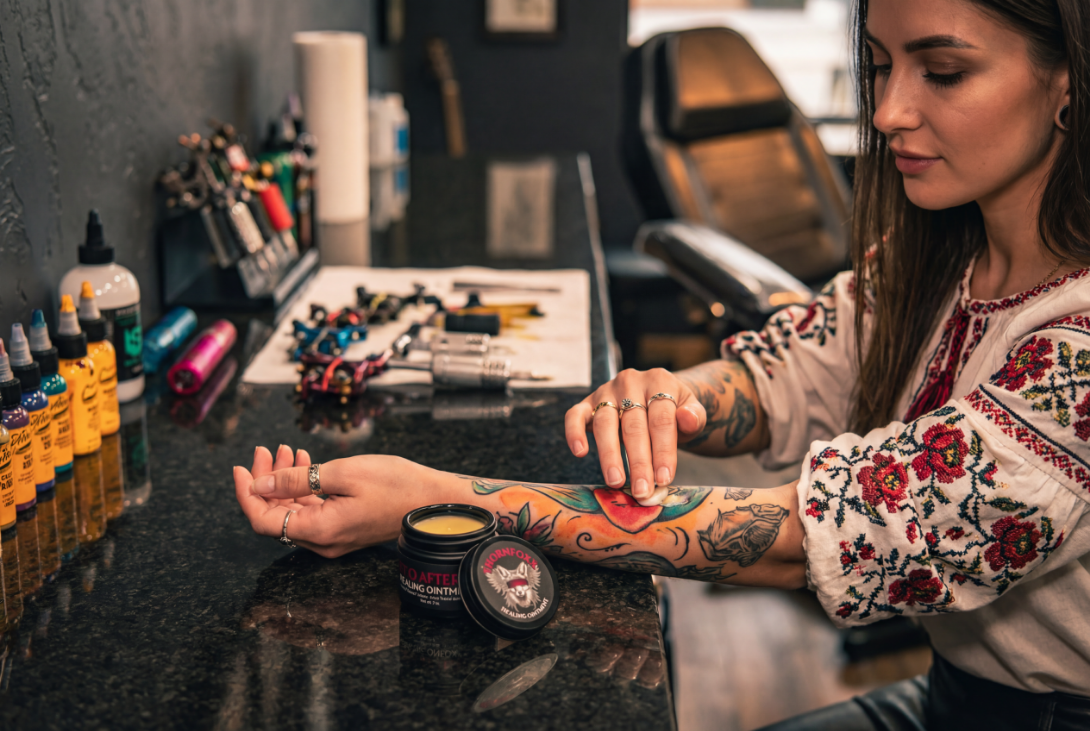
Next, apply a thin layer of a professional tattoo healing ointment to maintain moisture without suffocating the skin barrier.
Additionally, avoid soaking the tattoo, exposing it to sunlight, or wearing tight clothing. Infection prevention during this stage protects both your health and your artwork.
Stage 2: Itching & Flaking (Days 7–14)
As the outer layer begins repairing itself, dryness and itching often intensify. At this point, light scabbing and flaking are expected.
Although scratching may feel tempting, it can disrupt pigment retention and increase healing time. Instead, maintain consistent hydration using a lightweight tattoo aftercare balm.
Proper moisture during this phase helps:
-
Reduce irritation
-
Minimize cracking
-
Support smooth skin regeneration
Meanwhile, continue avoiding submersion in pools, hot tubs, or baths. Controlled healing produces better long-term vibrance.
Stage 3: Peeling & Temporary Dullness (Weeks 2–4)
Around the third week, many people worry their tattoo looks faded. In reality, this temporary cloudiness occurs as dead skin sheds and new layers form underneath.
Rather than exfoliating or forcing the peeling process, allow the skin to renew naturally. Picking at flakes can remove pigment prematurely and affect final clarity.
Consistent hydration and gentle cleansing remain essential. Over time, as the surface settles, color and contrast become more defined.
Stage 4: Deep Healing & Long-Term Tattoo Care (1–6 Months)
Even when the surface appears healed, deeper layers continue regenerating. Because UV exposure and dryness are major causes of fading, long-term protection becomes crucial.
To preserve tattoo vibrance:
-
Moisturize daily
-
Apply broad-spectrum SPF on healed tattoos
-
Avoid prolonged sun exposure
-
Maintain overall skin health
Daily tattoo care isn’t just maintenance — it’s preservation.
A high-quality tattoo healing ointment that transitions into daily care helps maintain bold lines and rich saturation long after the initial healing phase.



What Can Slow Tattoo Healing?
Several factors can delay recovery:
-
Inconsistent aftercare
-
Excessive moisture or heavy petroleum products
-
Sun exposure
-
Friction from tight clothing
-
Picking or scratching
-
Smoking or weakened immune response
Because skin health directly impacts ink retention, clean, intentional aftercare products make a measurable difference.
Choosing the Right Tattoo Aftercare
Not all tattoo aftercare products are formulated equally.
Look for:
-
Non-petroleum formulas
-
Lightweight texture
-
Clean ingredients (no parabens or phthalates)
-
Vegan and cruelty-free standards
-
Studio-trusted performance
Thornfoxx Luxury Tattoo Healing Ointment is engineered to support balanced healing while preserving depth, contrast, and saturation. Designed for both fresh and healed tattoos, it delivers professional-grade protection without clogging or buildup.
Final Thoughts
Healing a tattoo is not a race. While the surface may settle within weeks, true recovery takes patience and consistency.
When properly cared for, your tattoo will maintain its clarity and boldness for years. However, neglecting early stages can compromise long-term results.
Respect the process. Protect the art. Preserve the bold.